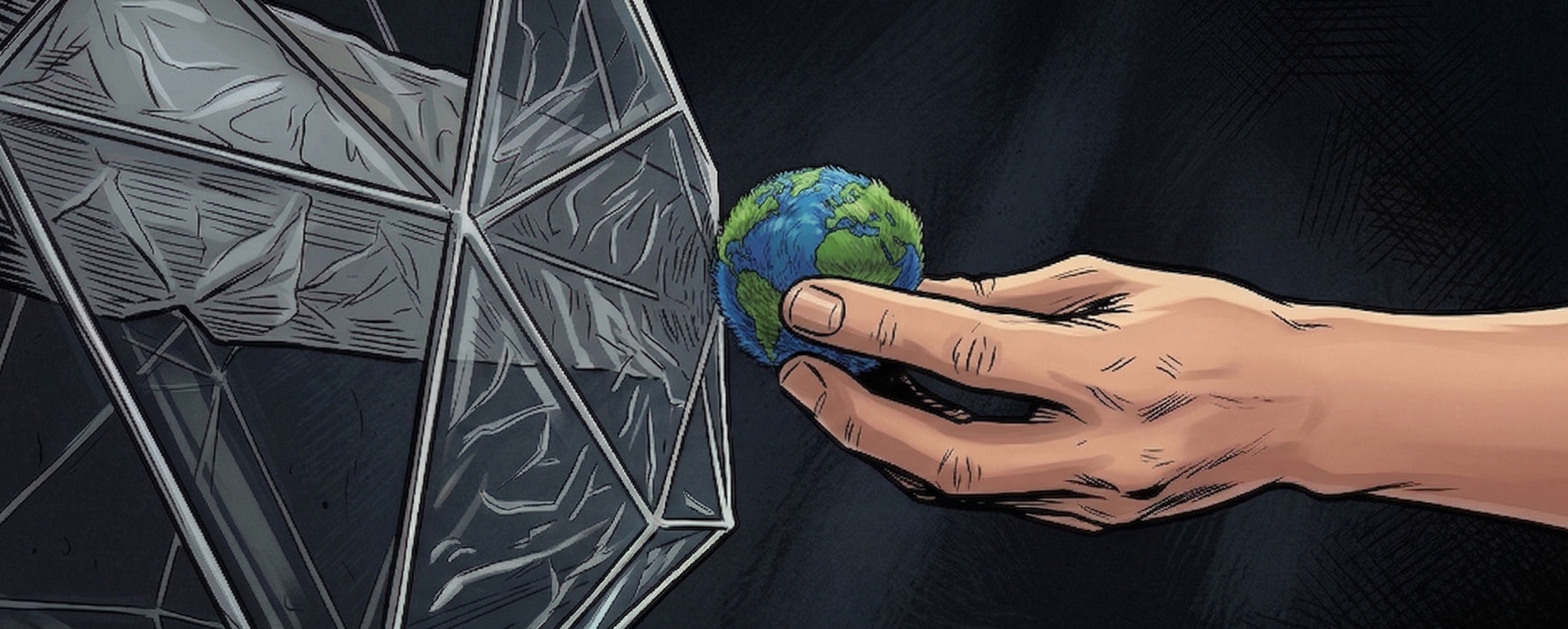
Millions of species share this planet with us.
Elephants grieve. Octopuses solve puzzles. Dolphins call each other by name. Dogs have been sleeping at the foot of our bed since the Ice Age. We love them. They love us. And we’re still guessing what they’re thinking. Usually, the guess is food.
We’ve lived together for thousands of years. And we still can’t have a real conversation with any of them.
So if we can’t talk to the species that share our own world… how could we ever talk to something from another planet?
We have no idea. But we keep trying. And for questions science can’t answer yet, there’s always art. Movies are where humanity prototypes impossible conversations. In a way, every one of these films is an attempt to build an interface for our first contact.
Each one took a different direction. Some said feeling is enough. Some asked if conversation is even possible. Some went further and designed an entirely new system. I went down that rabbit hole… exploring their design choices.
2001: A Space Odyssey, 1968
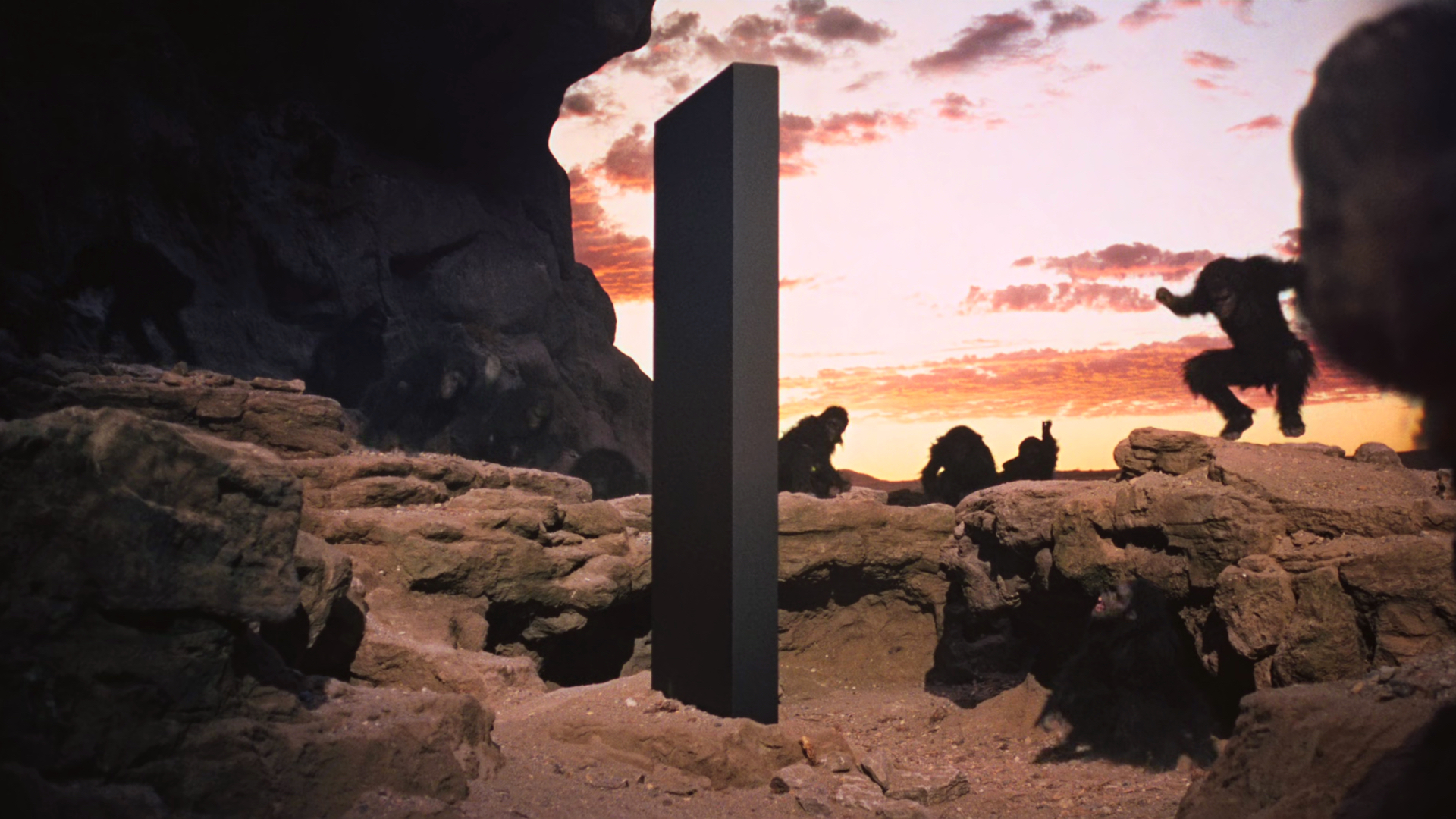
Kubrick chose silence.
His alien never speaks. Not because it is arrogant. But because we wouldn’t understand if it did. The very reason we don’t explain our algebra to ants. The concept doesn’t fit inside their world. We’re their ants. Conversation isn’t just difficult. It’s meaningless.
Kubrick’s alien simply appears. Changes humanity and leaves. Which, if we’re totally honest, is exactly how our universe has interacted with us so far.
Look at the design of that alien. He didn’t imagine it to be a creature or a machine. It is just a black rectangle. No eyes. No hands. No interface. A shape so simple that if you showed it to a design client, they’d ask for their money back. Almost insulting. Insulting to a designer… Insulting to our expectations… Kubrick strips away every visual cue humans use to understand something. By removing every expected feature, he makes the alien truly alien. That’s why Kubrick is “Kubrick.”
In design, negative space isn’t empty. It’s intentional absence. The alien is pure negative space. It communicates by refusing to communicate. The absence is the message.
Kubrick’s answer was brutal. He said don’t even try. But what if someone imagined it differently?
E.T., 1982
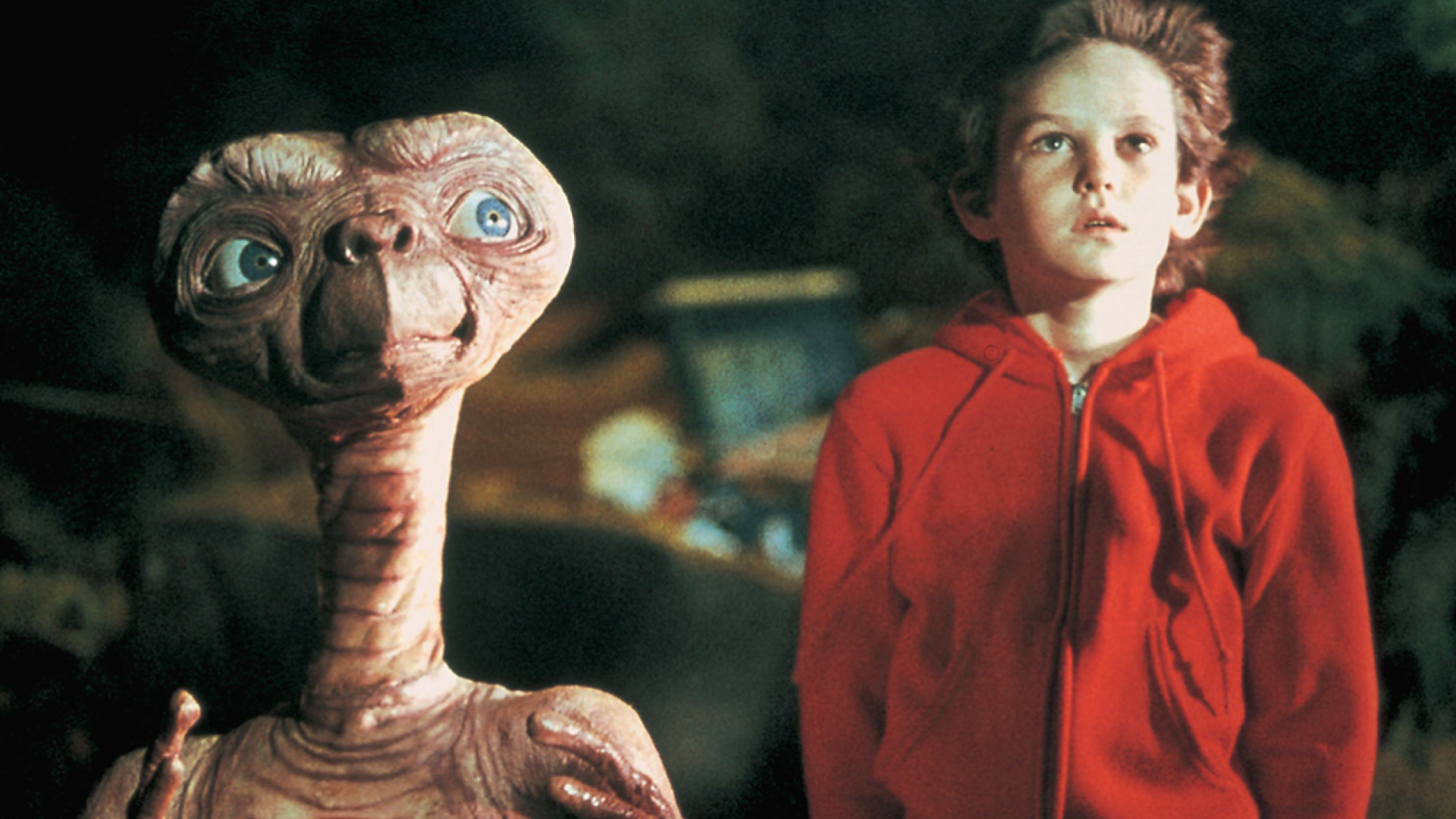
Spielberg chose empathy.
He begins with a kid growing up after his parents’ divorce. Someone who already knows what it feels like to be alone and not understood. Then he places an alien in the same position. Separated from its family. Alone on a planet that doesn’t make sense.
Two strangers who don’t share a single word of the same language, on the same planet, trying to understand each other through a similar feeling.
For Spielberg, that was enough.
Spielberg has often said his parents’ divorce shaped E.T. So the biggest communication gap in that movie isn’t between planets. It is across the dinner table. The alien just made the distance visible.
Look at how he designed the alien as an interface. With eyes that big, emotion becomes the first thing you notice. Emotion is the data. The face is the display. Every expression on E.T.’s face mirrors a child’s emotion. Fear. Wonder. Joy. Loneliness. The design isn’t trying to impress us. It is trying to connect with us.
Spielberg practiced empathic design before the term even existed. He didn’t ask, “How should the alien look?” He asked, “How should the alien make you feel?” Form followed feeling.
Everything about his alien is built for emotional readability. The alien is just a way for us to recognize ourselves. The alien becomes a mirror.
But mirrors work only when the reflection looks like us. What if the alien has no emotions to mirror? What if empathy isn’t universal? Enter Carl Sagan.
Contact, 1997
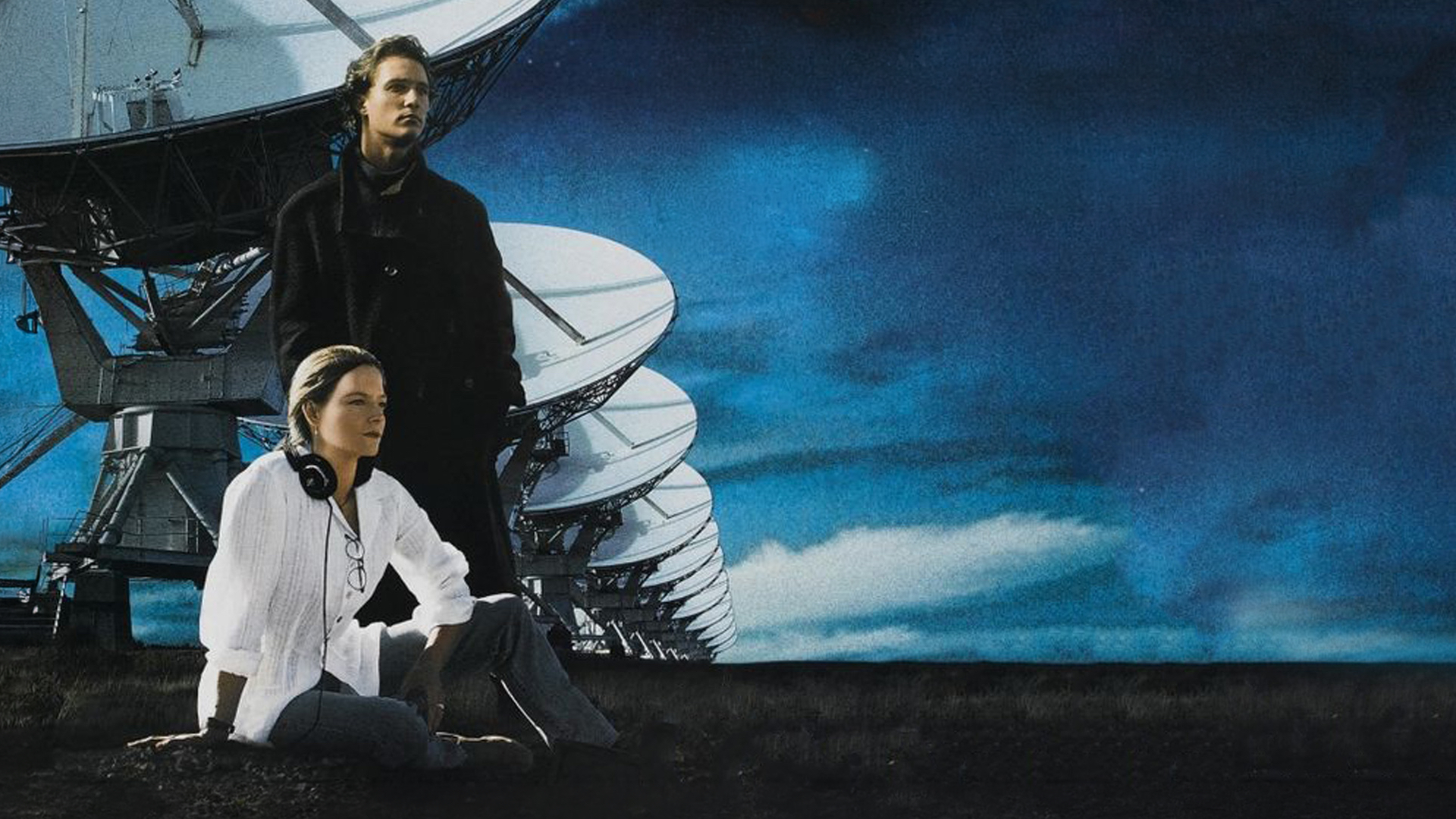
Carl Sagan chose math.
His alien signal was built on prime numbers. Sagan believed that if two intelligences exist in the same universe, math might be the one thing they can have in common.
When humanity made its first real attempt to contact, the Voyager Golden Record, we sent a bit of everything… sounds, music, images, greetings. But the instructions for reading it were drawn as simple diagrams built using mathematics. Because we assumed numbers might be the only language any intelligence could understand.
It’s a product designed for a user that might not exist. We shipped it anyway. Talk about shipping before product–market fit.
But here’s the strange thought. Math feels universal to us… but it was still invented by humans who live with a specific gravity, specific senses, and specific dimensions. We didn’t discover math the way we discovered fire. We built it. Piece by piece. Because we needed it. To survive, measure, and understand our world. Everything starts with the need. We invented zero because we needed a way to represent nothing. A species that has never experienced absence might have no use for it.
The Piraha people in the Amazon don’t have words for exact numbers. Their math is basically “small” and “large.” Because… They never needed precise counting.
But for Us?! We need exact numbers along with calculus. Otherwise, how would we figure out how late our Amazon delivery will be?
I’m not second-guessing Sagan. Maybe math is universal. Or maybe it’s not. Honestly, I have no idea. Math and I started having some issues around the time algebra class started. Either way, Sagan made the best bet anyone could. I would have just sent Lumy’s App Store link and hoped for a download.
Math is elegant. But it’s cold. What if the alien was like me? Hated maths.
PK, 2014
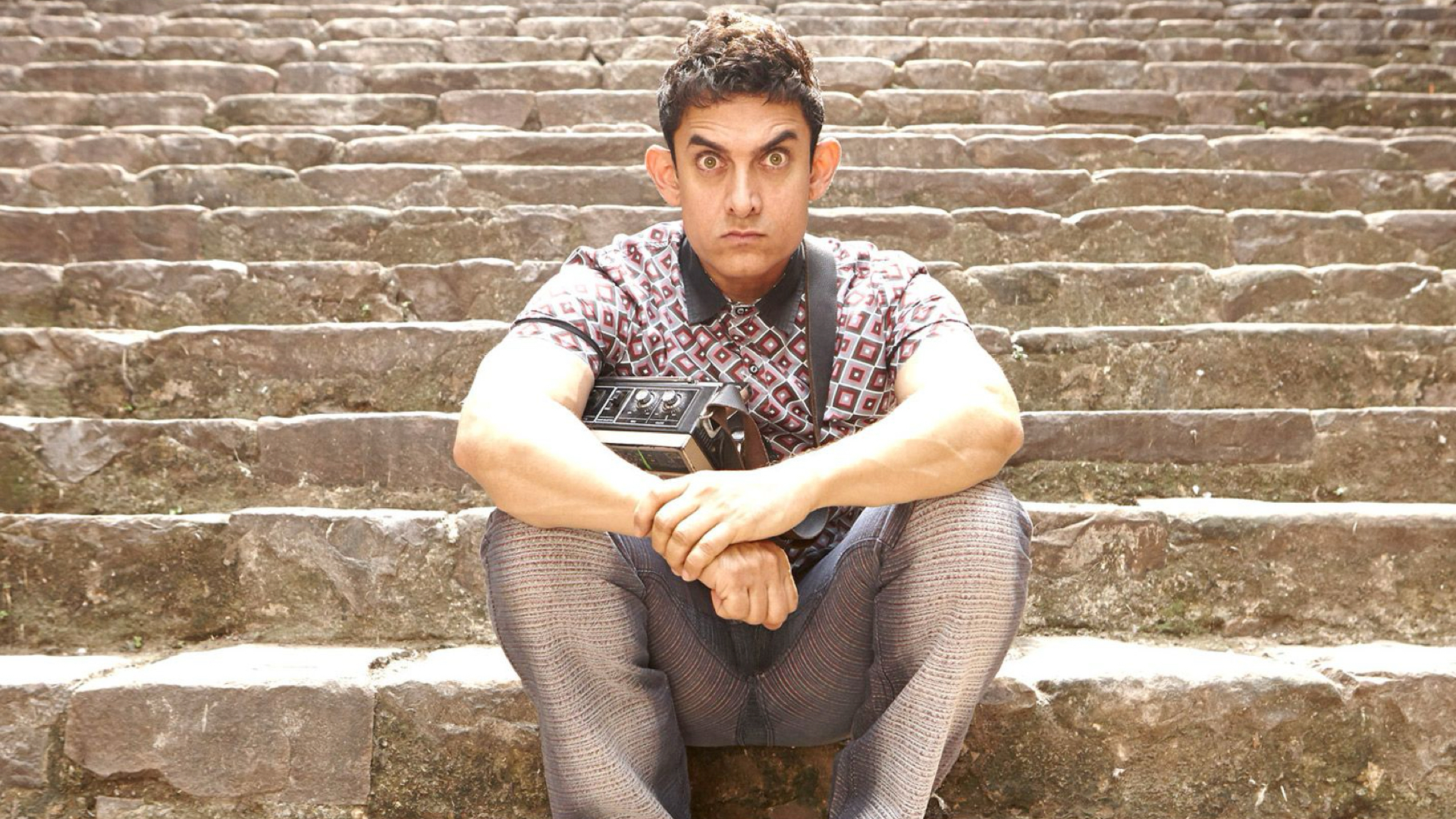
Rajkumar Hirani chose touch.
Hirani placed his alien in the most linguistically and socially divided place. His answer to alien communication was the simplest one… touch.
His alien holds someone’s hand, and it downloads everything… memories, feelings, language, even the lies people tell themselves.
Funny on the surface. Fascinating underneath.
In a place where human-built systems like region, religion, caste, and class divide people, touch becomes the only honest option. Before we learned to argue, persuade, preach, or manipulate with words, humans knew how to hold someone’s hand.
Think about the design of that idea. Language is slow. Words arrive one after another. It takes time to explain what we feel. Hirani’s alien bypasses all that. Just a direct transfer of experience from one mind to another. No progress screen. No consent pop-up.
The alien ends up understanding people better than anyone in the movie. Because he communicates without the one thing that humans keep using to confuse each other. Words.
Touch worked because it skipped everything humans built. But what if you can’t touch? What if the person you need to reach is on the other side of time?
Interstellar, 2014
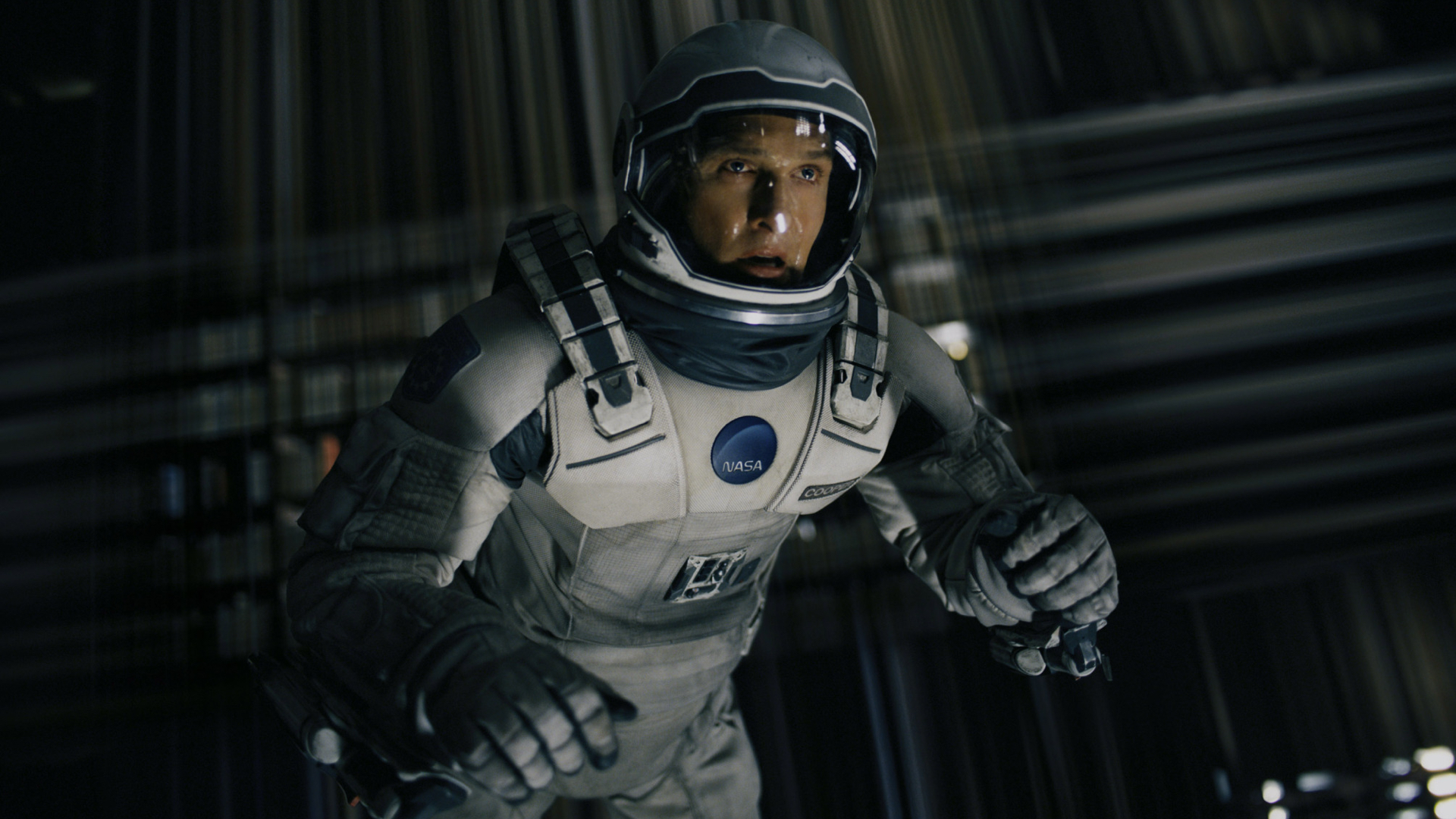
Christopher Nolan chose gravity.
In Nolan’s world, beings from the far future don’t use words to talk to the past. They use gravity. The messages appear as small disturbances. Books that fall. A watch hand that ticks. None of it looks like a conversation. It all looks like a coincidence. Nolan imagines a universe where coincidence has a mechanism… and that mechanism is love. Not as a metaphor. As an actual force that guides the message home.
Technically, Nolan’s aliens are us… from the far future. Give humans enough time and distance, and we start to look alien to each other.
Think about gravity for a second. It’s actually the weakest force in nature. You defeat it every time you pick up your coffee mug. You don’t even think about it. You just grab the mug and win against a fundamental force of the universe. The refrigerator magnet easily overpowers the gravity of our entire planet. And somehow, Nolan turns that tiny force into a message that can cross time. Which makes gravity a strange kind of language. Weak. But impossible to ignore. And Nolan gave that language to a father.
For years, the daughter believed her father had abandoned her. She was angry. She stopped waiting. But the whole time, he was right there. In the dust behind the bookshelf. In the ticking of the clock.
That’s the cruelest and most beautiful part.
A message isn’t complete when it’s sent. It’s only complete when the receiver is ready to receive it. Even the universe has to wait… until someone is ready to listen.
Gravity has been speaking to us all along. A sandglass measuring time through falling grains. Leaves falling, signaling autumn. Snow settling on branches, signaling winter. An apple falling, revealing something about the universe to Newton. A tear rolling down a cheek. We’ve been reading gravity our whole lives. We just never thought of it as a language. Nolan did.
I freaking love this movie.
All the previous films tried to design a bridge between two minds. Villeneuve imagines something stranger. What if crossing the bridge changes the traveler? Somewhere along that crossing, he ruined design hierarchy for me.
Arrival, 2016
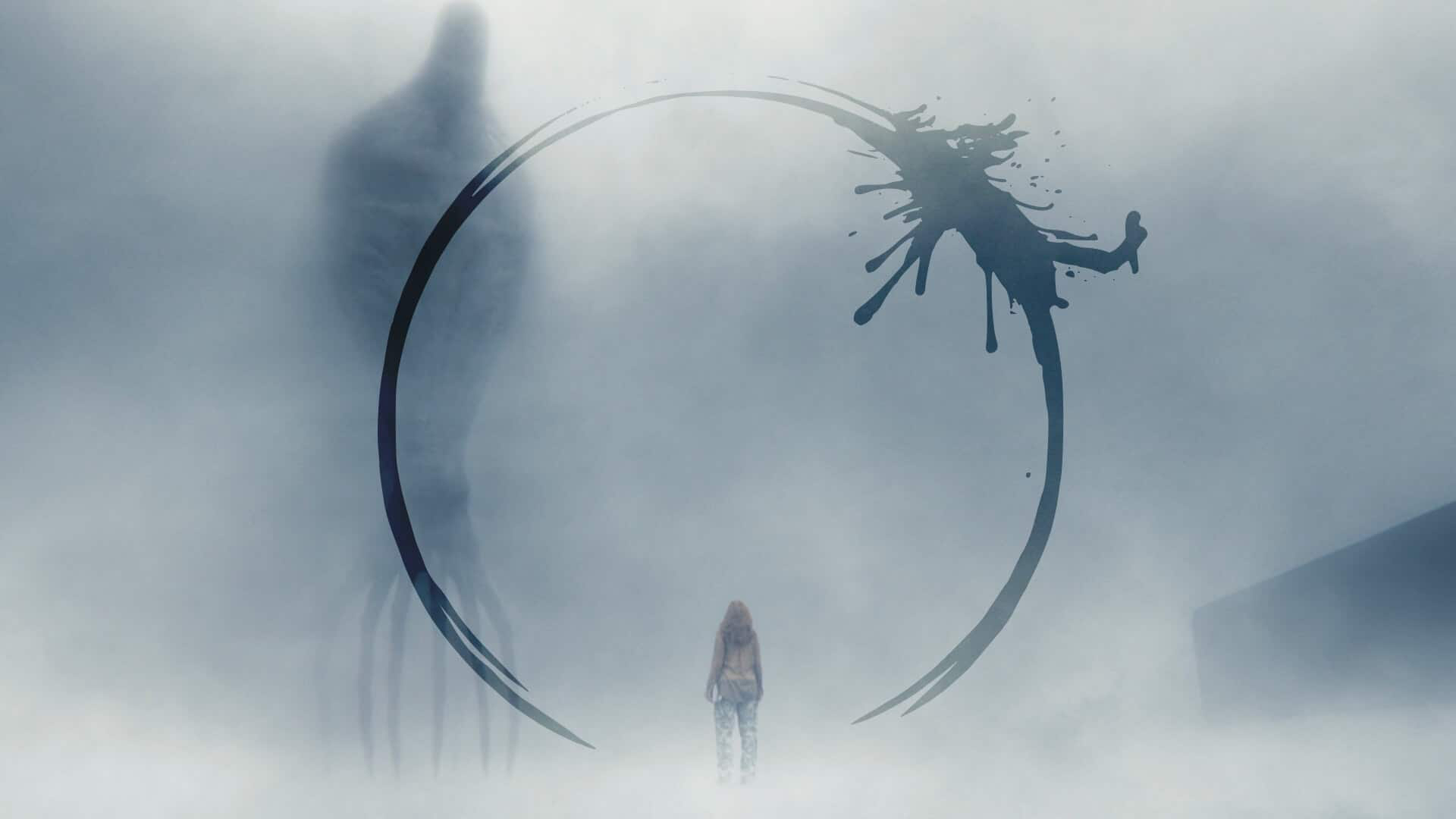
Of course, Villeneuve chose visual language. This is the director who gave us Dune. What else would his aliens use? Words?! Honestly, if his aliens had talked… I would have been personally offended.
His aliens don’t experience time the way we do. So their language is not a straight line. Each sentence is written as a circle, where the whole idea appears at once instead of unfolding word by word. Once we learn their language, something shifts… It changes how the mind perceives time. The future stops feeling like a guess. It starts feeling like a memory. Imagine learning a language and suddenly remembering tomorrow like we would remember yesterday. It’s wild.
For Villeneuve, communication isn’t just translation. It’s a transformation. We learn their language… our mind begins to work like theirs. To truly understand something alien, we might have to become a little alien ourselves.
Think about the circle as a design choice. Every human writing system moves in one direction. Left to right. Right to left. It always has a start and a finish. This one doesn’t have a clear starting point. Because it is meant to be understood all at once.
As a designer, I spend my professional life creating hierarchies… what the eye sees first, where the finger goes first. I never imagined designing without it. Their language feels like it has no hierarchy. Everything seems equally important. The whole idea of “first” disappears. It makes me feel like the hierarchy in our design is less of a principle and more of a human limitation.
Hang on… is experiencing everything at once really an alien-only thing?
Maybe we do feel something like that sometimes. In moments of awe. Think about being awestruck by a beautiful sunset. There’s no hierarchy in a sunset. We don’t notice the sun first, then the orange, then the clouds. It all arrives together. For a brief moment, the brain stops prioritizing things. Nothing is “first.” Nothing is “background.” We simply stand there and absorb it.
Maybe that’s what awe is. We design our entire lives around hierarchy. What matters most. What comes first. What’s urgent. And then a sunset shows up and our brain just… stops sorting. For a few seconds, nothing is more important than anything else. That might be the closest we get to thinking like this alien.
Sorry, like Villeneuve’s language… My mind usually wanders in circles. Let me circle back.
The design here isn’t decoration. The shape of the language is the philosophy of the species.
Also, each one asked how we might talk to aliens. Villeneuve asked what happens… when we do.
Closing Thought
Every filmmaker projected something human onto the alien. Kubrick projected our insignificance. Spielberg projected our loneliness. Sagan projected our logic. Hirani projected our contradiction. Nolan projected our love. Villeneuve made me question my design thinking.
Maybe alien movies are really about… how do two minds meet when they share nothing in common?
I should probably mention something. Every time I visit a friend who has a dog, I freeze. I don’t know if it wants to play with me or wants me gone.
Some humans can’t even talk to the dog in the room… yet we’re designing interfaces for beings from another galaxy. Designers everywhere have a habit of solving problems that don’t exist yet.
I started this as a quick preamble to a movie I’m excited about. Then curiosity took over.
Anyway… back to the reason this whole thing started. There’s a new alien movie coming.
And… It is shot by Greig Fraser. I’m pretty sure I could watch a blank wall for two hours if Greig lit and shot it. Now he gets space.
So yeah… I’m so excited for
Project Hail Mary.
Another attempt at designing an interface for the unknown. And the dog is still looking at us, waiting.
Disclaimer: I’m a designer who loves movies. The observations above are my interpretations based on what I watched and things I’ve read online. So if something here makes a Kubrick scholar flinch or a Nolan fan disagree… that’s completely unintentional. Just remember, this is written out of curiosity, not expertise.