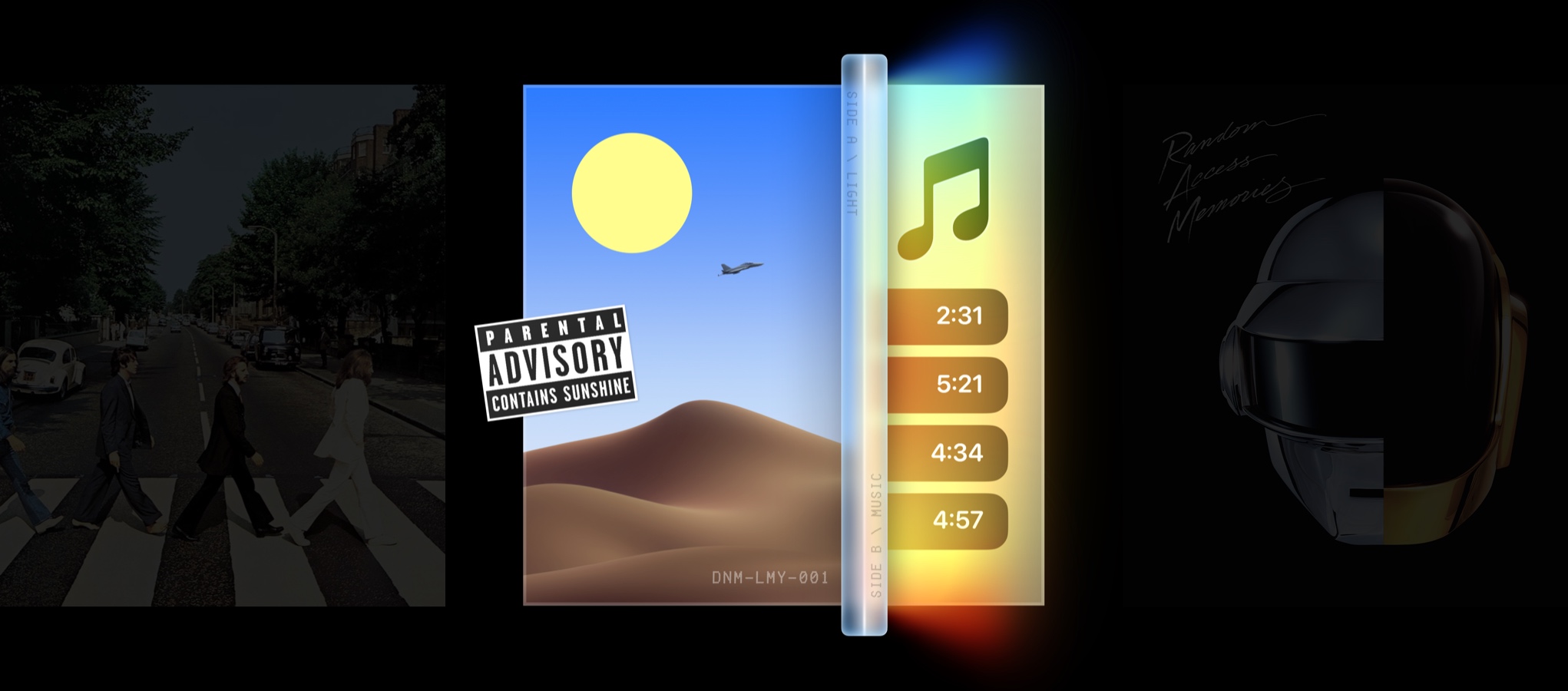
Recently, I had the chance to collaborate on creating an icon for Denim, an app I love. It is built around the idea that playlists are not just lists of songs, but acts of personal curation people want to give a visual identity to. Lumy, the app I make, lives in a very different world… light, atmosphere, skies, seasons, and time. Ashwin shared the idea of a playlist grid magically transforming into artwork, inspired by a user review describing Denim as a “magic wand for playlists.” I loved the idea. But for weeks, it just sat there in my head, not going anywhere.
Then I watched “Top Gun: Maverick” during its IMAX rerelease. I’m still not entirely sure why, but when I got home, I opened Sketch and started working on it.
The thing that had been stuck for weeks finally started to move. That’s what a movie, a song, a photograph, or anything soulfully made can do to you. Something about it rearranges your thoughts, and suddenly the thing sitting motionless inside you begins to move. To explain how it finally moved, I have to start with album covers.
Album Cover Logic
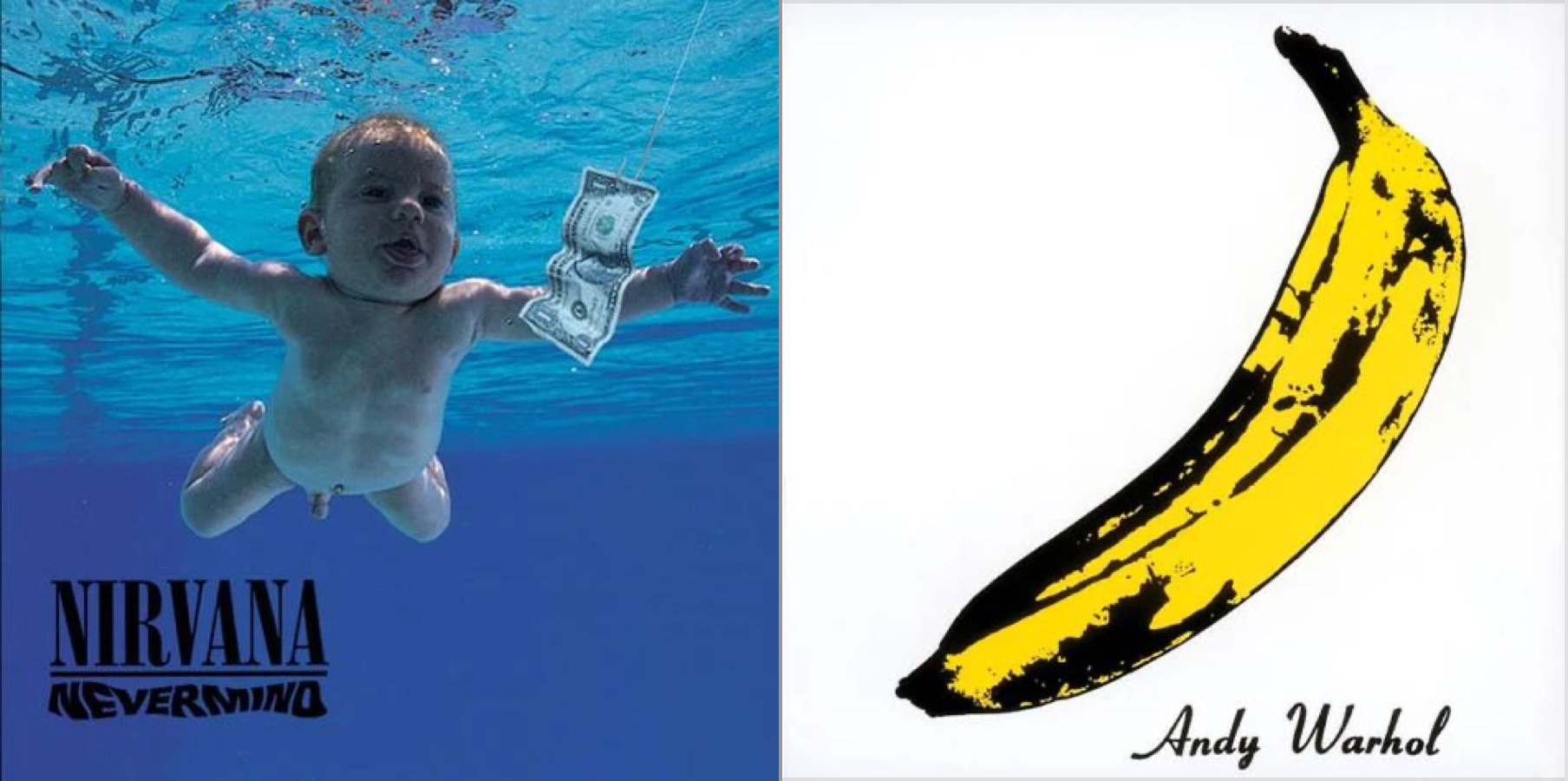
Think about some of these famous album covers. A baby underwater swimming after a dollar on a hook. A banana presented like fine art. All logically strange. But emotionally inevitable.
I design apps for a living, and the logic there works almost the opposite way. Every pixel has to justify itself. “Why is this here?” always has a logical answer, or it doesn’t ship.
But most of the album covers I admired earn meaning by refusing to explain themselves completely. Maybe this is why I got stuck. I kept looking for the logic when what I really needed was the feeling.
At the center of this new icon design was “a magic wand for playlists.” A wand is a lovely thing to build an icon around. But the first thing my brain did was worry about how a wand would rest on a table. Maybe that’s the mechanical engineer in me refusing to leave completely. Give it some flat faces so it doesn’t roll away. A few flat faces later, the wand had quietly turned into a prism.
And where have I seen a prism used like this before?
“Dark Side of the Moon”
An Ode to the Prism That Escaped Physics
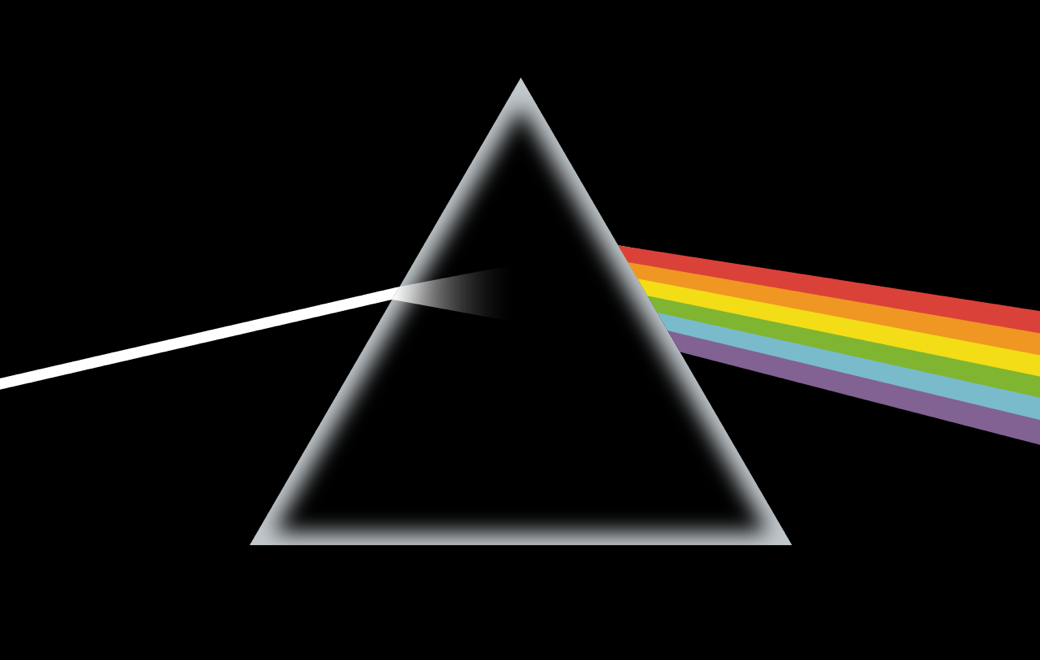
I am not a Pink Floyd fan. I grew up on Ilayaraja and Rahman. But I’ve seen this design since my childhood. The first place I remember seeing it was on the t-shirt of a construction worker laying bricks in my neighborhood. I believe most of us in my neighborhood had never heard of the words “Pink Floyd”. Most likely, that t-shirt once belonged to a rich kid who wore it, grew out of it, and whose mother later passed it to a woman working in their home. She eventually gave it to her son. That’s a strange yet familiar journey. Somehow, the prism kept traveling. From a record sleeve in 1973, to a dorm wall, to a rich kid’s wardrobe, to the mason in the heat. And the meaning changed each time it moved. To one of them, it meant music becoming light. To the other, it was simply a t-shirt. Something to wear in the heat. Same prism. Two completely different lives.
Anyway. The point is, this prism graphic stayed with me all these years. Technically, it is a physics illustration of refraction. Light entering glass and splitting into colors. That’s all it is. It should belong only in a science book. But somehow it drifted beyond physics… into album covers, dorm rooms, and wardrobes.
I think that’s what happens when something made with care moves through enough human lives.
Take a favorite song, for instance. The moment it leaves the studio… it stops belonging only to the artist. It becomes someone’s bus ride home. Someone’s college years. Someone’s late-night drive. Over time, the original meaning becomes just one layer among many.
Just like music, design can also travel beyond its original culture and become an emotional object. Like how this prism traveled farther than its creators could’ve imagined. It’s strange how many people recognize this prism without knowing where it came from. At some point, the symbol escaped the album and started living its own life.
Light Becoming Music
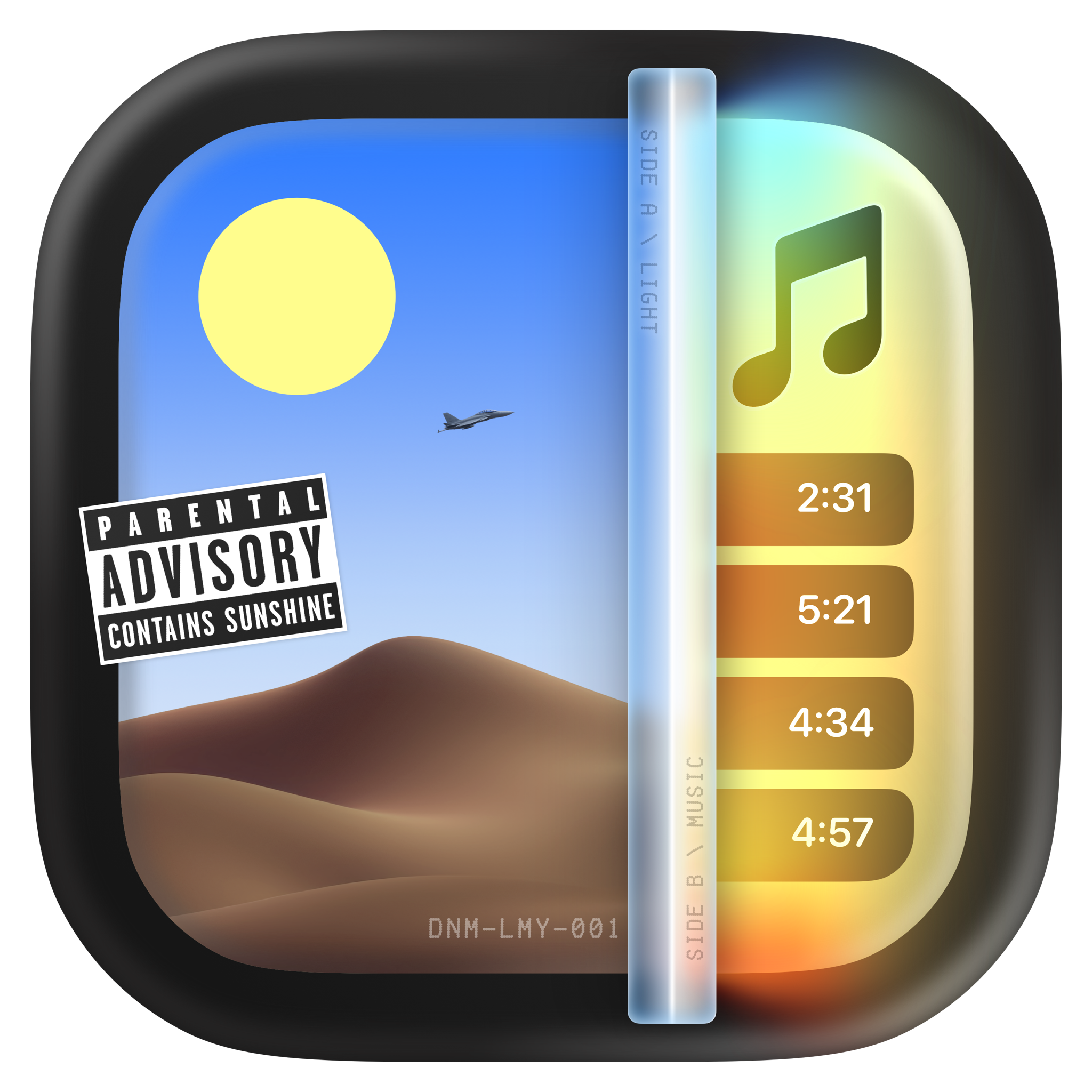
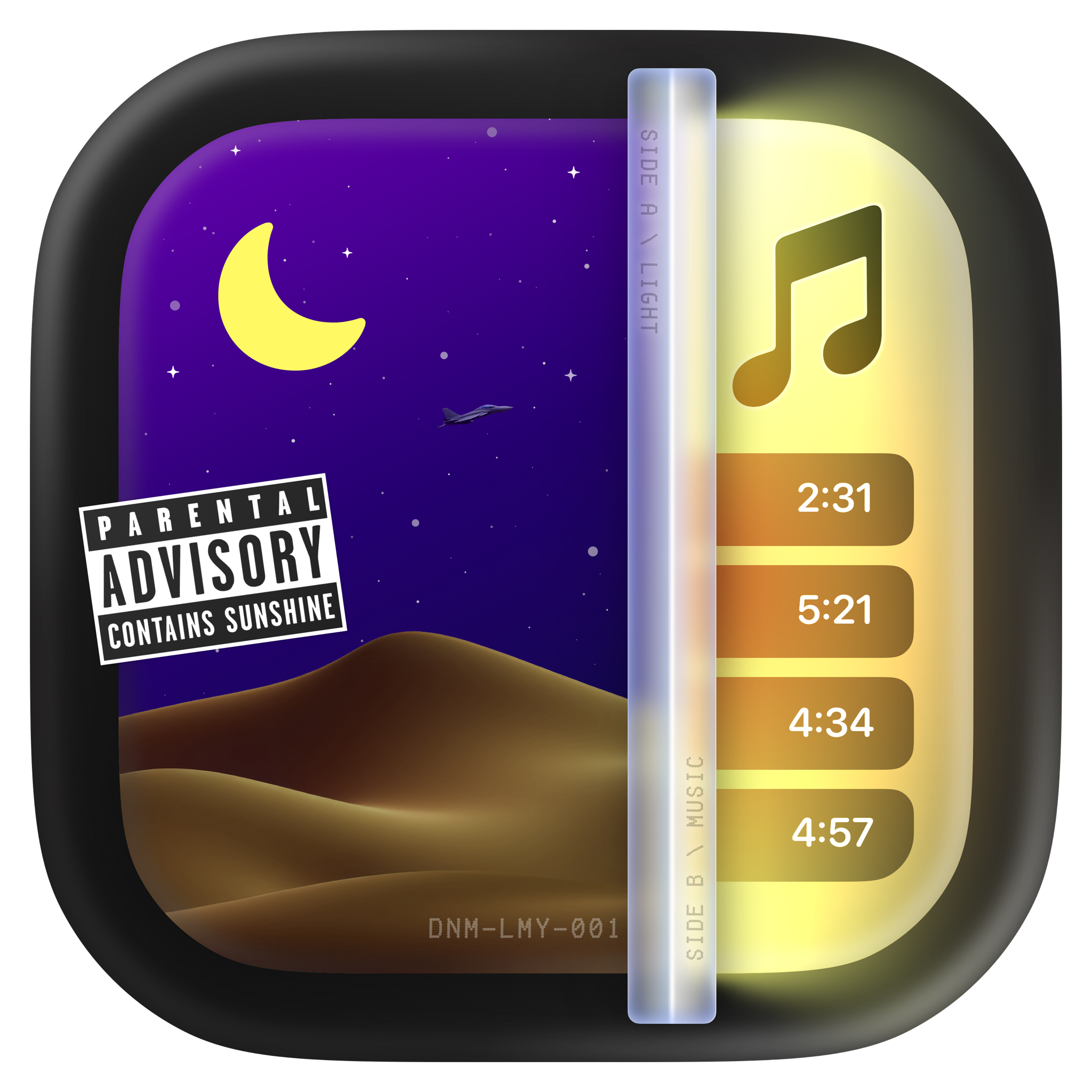
So that’s how I ended up using a prism as a wand. Lumy on one side: the sky, the sun, the light. Denim on the other: the playlist grid, the track lengths, the music. A prism between them, helping light become music.
In Dark Side of the Moon, the prism is scientific. Light goes in. Colors come out. Here, the prism isn’t performing an optical experiment. It’s performing a transformation.
So I made it frosted instead of clear.
Slide to compare the two.
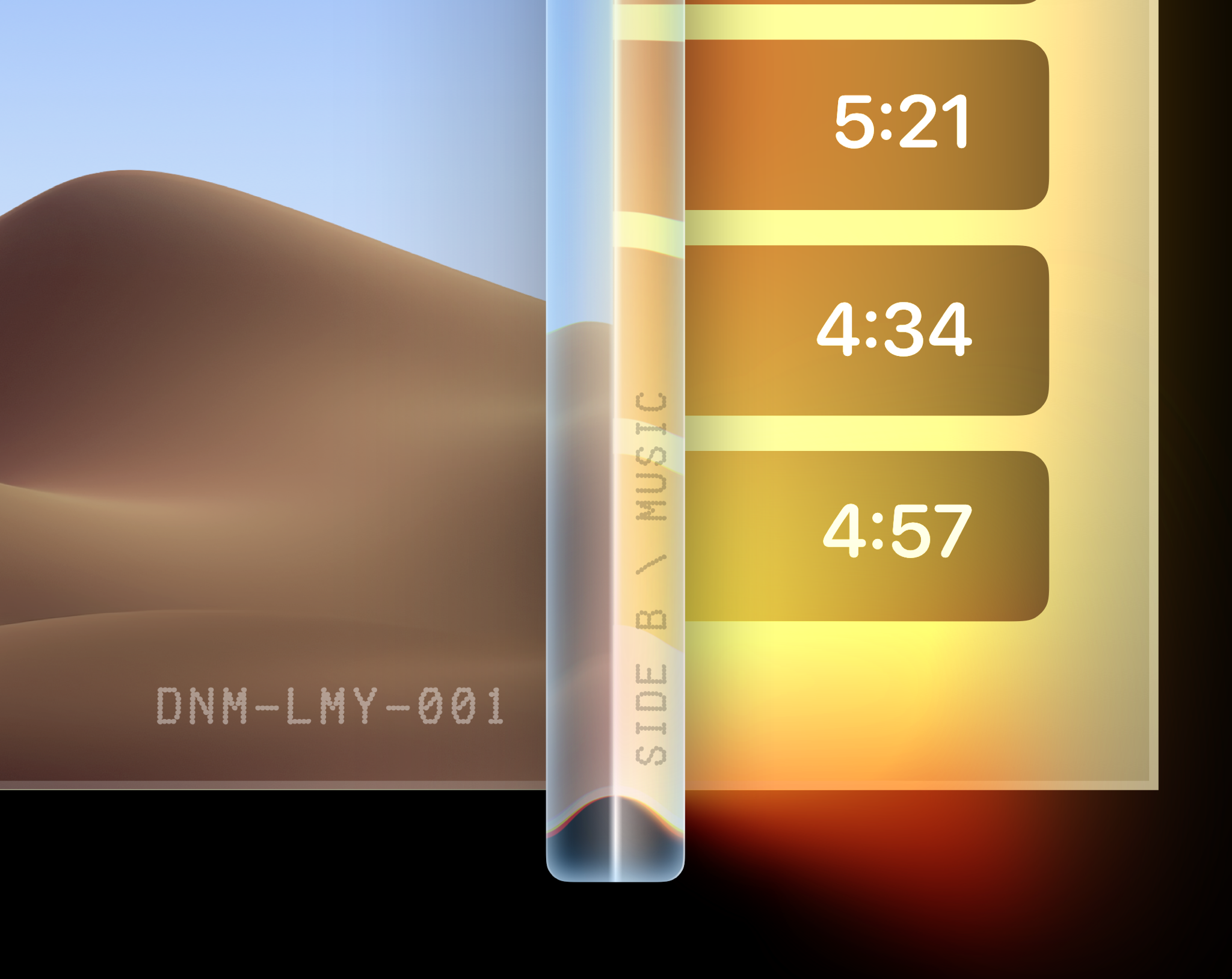
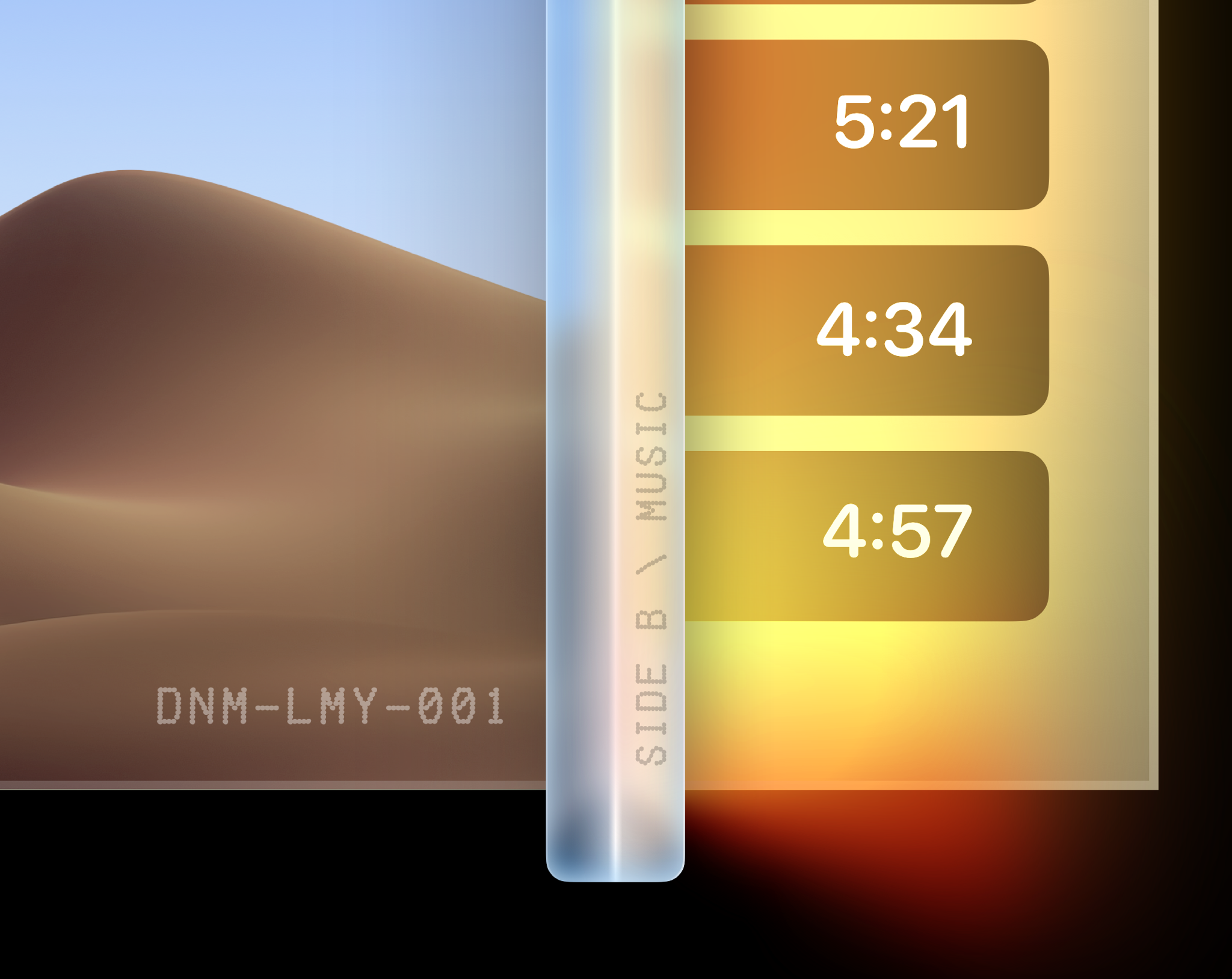
The mystery felt more right than staying true to the physics. It felt closer to a playlist. Tracks go in. Emotion comes out. No physics. Just memory, nostalgia, taste, mood, and all the fuzzy things that make it personal.
There’s a “Parental Advisory” sticker that reads “Contains Sunshine,” because album covers are allowed to be a little silly. Once you’re into album-cover logic, you might as well commit.
I also wanted the icon to feel like something you’d hold. A record sleeve with a catalog number. A small nod to the days when music literally had two sides: SIDE A / LIGHT. SIDE B / MUSIC. “LIGHT x SOUND” would’ve been technically accurate. But I chose “MUSIC”. I love that humans took something as elemental as sound and turned it into feeling. Light becoming music is the version I kept.
There’s a dark mode too. An icon about light should know when the sun goes down.
The Last Etchings
A small fighter jet is crossing the sky. My own etching. Now, all done, I think I finally understand what a movie about fighter jets had to do with light becoming music. You don’t watch Top Gun for the plot. You watch it to feel the speed, the weight of the jets, the feeling of altitude. That’s the kind of rule album covers run on. Maybe the movie was just a reminder that certain things earn their meaning through feeling instead of explaining.
Somewhere between light, sound, memory, and symbolism, the decoding ended and the dwelling began.
Runout Groove: If you caught the “Dark Side of the Moon” homage long before I explained any of this… It’s nice to know you exist. That’s the only way these things were meant to land.